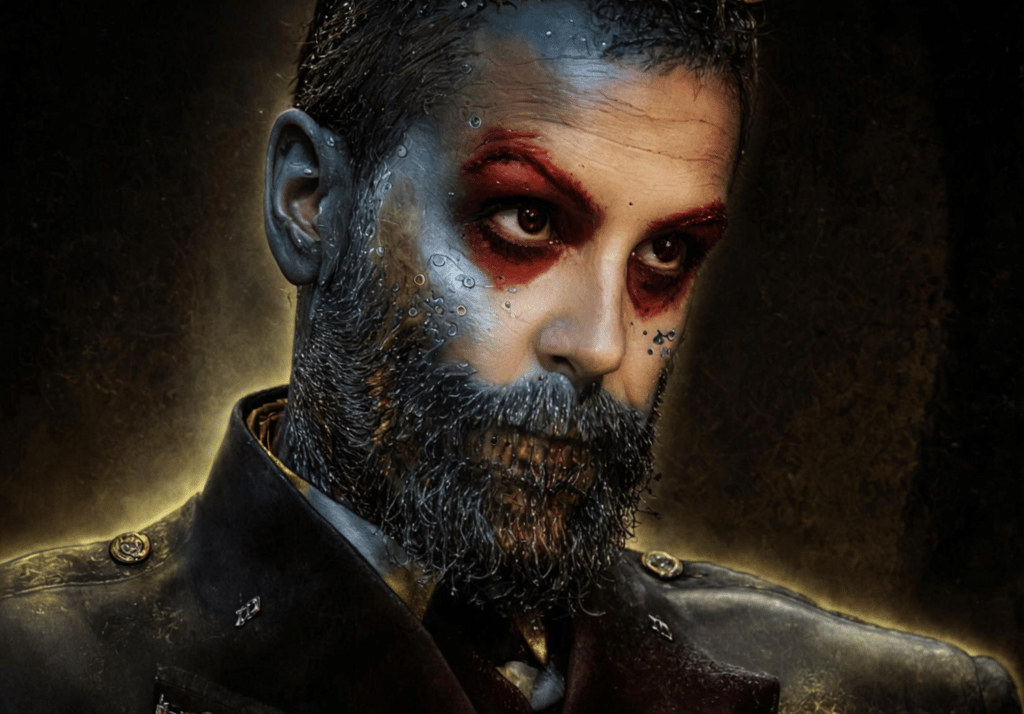
Jack Fanone #1
A Life of Service - Jack Fanone wasn’t supposed to be a cop. Growing up, he was the kind of kid who was more likely to be in detention for talking back than getting an award for good behavior. He had a rebellious streak that clashed with authority figures, but underneath the tough exterior was a loyalty that ran deep. He wasn’t one to sit on the sidelines when someone was in trouble. He just didn’t know what to do with that sense of loyalty—at least, not yet.
DJT
1/2/20255 min read
A Life of Service
Jack Fanone wasn’t supposed to be a cop. Growing up, he was the kind of kid who was more likely to be in detention for talking back than getting an award for good behavior. He had a rebellious streak that clashed with authority figures, but underneath the tough exterior was a loyalty that ran deep. He wasn’t one to sit on the sidelines when someone was in trouble. He just didn’t know what to do with that sense of loyalty—at least, not yet.
Jack grew up in Washington, D.C., surrounded by the city’s contradictions. The iconic monuments, the grandeur of the Capitol, and the upscale neighborhoods weren’t far from areas struggling with poverty, crime, and systemic neglect. His family was part of both worlds. His father, a well-respected attorney, moved through the polished circles of D.C. law and politics, but Jack was raised by his mother in a part of town where life felt more raw and unpredictable. He saw the disparities between these two worlds every day.
School wasn’t Jack’s thing. He didn’t like being told what to do, and he had a tendency to question authority—often loudly. Teachers saw him as a troublemaker, but his friends saw something else: a protector. He was the kid who stood up to bullies, sometimes with words and sometimes with fists. Jack had an innate sense of justice, even if he didn’t always know how to express it. He wasn’t the type to follow the rules just because someone told him to. He needed a reason, something worth believing in.
As Jack grew older, he drifted. He took on odd jobs—construction, delivery driving—but none of them gave him the sense of purpose he craved. He felt restless, like he was meant for something more but didn’t know what. His father encouraged him to consider college or law school, but Jack couldn’t picture himself behind a desk or arguing cases in court. He wanted to be in the thick of things, where the stakes were real and immediate.
Everything changed on September 11, 2001. Jack, like so many others, watched in shock as the Twin Towers fell. But what stayed with him weren’t just the images of destruction—it was the footage of first responders running toward danger while others ran away. Firefighters, police officers, and EMTs climbed the burning stairwells, knowing they might not make it back down. Jack couldn’t stop thinking about that kind of bravery—the willingness to give everything to protect others. It sparked something in him, a realization that service wasn’t a constraint—it was a cause.
Shortly after 9/11, Jack made a decision that would change the course of his life: he applied to the Metropolitan Police Department (MPD). Becoming a cop in D.C. wasn’t for the faint of heart. The nation’s capital wasn’t just any city—it was a symbol of democracy and a target for unrest. The MPD wasn’t just responsible for keeping neighborhoods safe; they were called on to secure protests, protect national monuments, and handle high-profile events where tensions often ran high.
The training was grueling, but Jack thrived in the physical and mental challenges. For the first time, he felt like he was part of something bigger. He pinned the badge on his chest with pride, but he wasn’t interested in climbing ranks or playing politics. He didn’t care about titles or awards—he just wanted to be out in the field, doing the work that mattered.
Jack worked some of the toughest beats in D.C., patrolling neighborhoods where gunshots rang out at night and tempers flared over the smallest disputes. He saw the worst of humanity up close—addiction, abuse, and poverty—but he never let it make him cynical. To Jack, the job wasn’t about cracking down on people—it was about protecting them, even from themselves sometimes.
He had a gift for de-escalation. His partners often marveled at the way he could walk into a volatile situation and talk someone down. He wasn’t the type to puff up his chest and issue threats—he spoke plainly and directly, and people trusted him. "He had a way of cutting through the noise," a fellow officer once said. "People listened to Jack because they knew he wasn’t full of it."
But when things went south, Jack didn’t hesitate to act. He was fearless when the stakes were high. In one particularly tense call, he and his partner responded to a report of an armed suspect barricaded inside a house with hostages. As negotiations broke down and the suspect became increasingly agitated, Jack made the split-second decision to enter the house with a tactical team. The situation ended without loss of life, thanks to Jack’s cool-headedness and refusal to back down. "He’s the guy you want next to you when things go to hell," his partner later said.
Despite the adrenaline and danger of the job, Jack always made time for his family. He was a devoted father to his daughters and took pride in being present for them, even when his job demanded long hours and unpredictable shifts. He was the kind of dad who would show up to school events straight from a shift, still in uniform, with a smile on his face. To his daughters, he wasn’t just a cop—he was their protector and their hero.
Outside of work, Jack was a man with a dry sense of humor and a passion for motorcycles, country music, and cold beer. He was known among his friends for being a straight shooter—someone who would tell you the hard truth but also have your back when it mattered. He wasn’t flashy or boastful. If anything, he was uncomfortable with praise. To Jack, he was just doing his job.
By the time 2021 arrived, Jack was a veteran officer with over two decades of experience. He’d seen it all—high-speed pursuits, armed standoffs, and moments of quiet heroism that never made the news. He had survived near-death encounters and moments of doubt but always found his way back to his sense of duty. He could have retired and enjoyed a quieter life, but service wasn’t just a job for Jack—it was part of who he was.
When January 6, 2021, dawned, Jack wasn’t scheduled to work. He was off-duty, watching the unfolding chaos on television like millions of others. But as the crowd swarmed the Capitol, chanting and pushing through barricades, Jack felt a familiar pull in his chest—the same pull that had driven him to join the force after 9/11. He didn’t think twice.
He grabbed his gear, laced up his boots, and headed straight for the Capitol. He wasn’t on the roster that day, and no one had called him in. But Jack knew that someone had to show up.
The decision he made that morning would change his life forever.