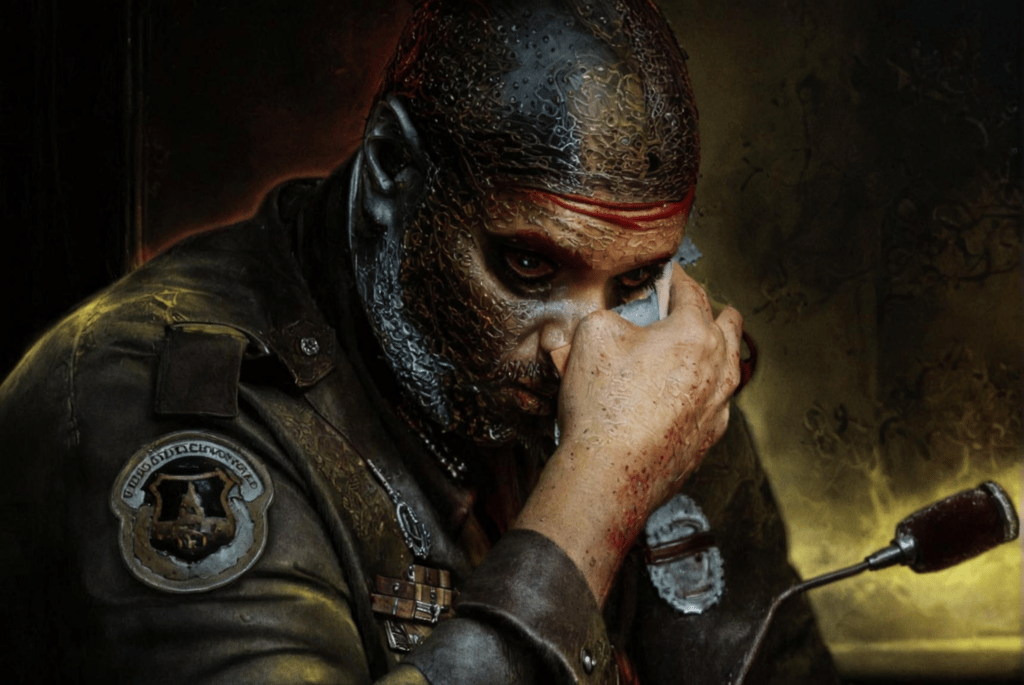
Larry Dunn #2
The Storm Arrives - January 6, 2021, was supposed to be just another day at work for Larry Dunn. He woke up early, as he always did, and took a few minutes to gather his thoughts before his shift. The Capitol building was familiar to him—he knew its halls, staircases, and rotundas better than most. He also knew how unpredictable his work could be. One day could bring routine patrols, while the next could throw a security scare his way. But nothing about that morning seemed out of the ordinary—at least, not at first.
DJT
1/3/20255 min read
The Storm Arrives
January 6, 2021, was supposed to be just another day at work for Larry Dunn. He woke up early, as he always did, and took a few minutes to gather his thoughts before his shift. The Capitol building was familiar to him—he knew its halls, staircases, and rotundas better than most. He also knew how unpredictable his work could be. One day could bring routine patrols, while the next could throw a security scare his way. But nothing about that morning seemed out of the ordinary—at least, not at first.
Larry brewed a pot of coffee and listened to the news while lacing up his boots. The media was buzzing about the congressional certification of the Electoral College votes, a process that would confirm Joe Biden’s victory in the 2020 presidential election. The coverage also mentioned the planned “Stop the Steal” rally at the National Mall, where the outgoing president was scheduled to speak. Larry didn’t think much of it. Washington, D.C., was no stranger to political protests. He’d worked through plenty of them before—some loud, some emotional, but always manageable.
But as Larry drove into work that morning, he noticed something that put him on edge. People were pouring into the city in unprecedented numbers, and the mood in the air felt different. Trucks and vans with oversized flags and political slogans lined the streets. Strangers shouted from sidewalks, wearing matching hats and waving signs that read, "Stop the Steal." It wasn’t just the size of the crowd—it was the tone. There was a raw, uncontained anger that Larry could almost feel in his chest.
When he arrived at the Capitol, Larry checked in with his fellow officers and took up his assigned post. The building, with its grand marble columns and historic chambers, always felt imposing and serene. But as the hours passed, the steady hum of the crowd outside turned into a deafening roar. Larry’s radio crackled with reports from officers stationed near the barricades. The tone of the calls was urgent. "They’re pushing through the barriers!" one officer shouted.
Larry’s pulse quickened as he tightened his grip on his shield. Within minutes, the first wave of rioters crashed through the barricades like a tidal wave. Hundreds of people surged forward, many of them dressed in tactical gear—helmets, vests, and even earpieces. Some carried metal poles and bats; others had flagpoles sharpened into makeshift weapons. The officers stationed outside fought to hold the line, but they were vastly outnumbered.
The Capitol doors buckled under the pressure of the mob. Windows shattered, and the air filled with the sounds of glass breaking, furniture being toppled, and angry chants. "Fight for Trump!" they shouted. "Stop the steal!" Larry could feel the vibrations of their footsteps reverberating through the floor beneath his boots.
As the mob poured inside, Larry joined a team of officers rushing to form an interior barricade near the Speaker’s Lobby. Their orders were clear: stop the rioters from reaching the lawmakers still trapped in the chamber. Larry’s heart pounded as he took his position, gripping his shield tightly and bracing for the inevitable impact.
The first rioters rounded the corner, their faces twisted with rage. They screamed insults at the officers, calling them "traitors" and "cowards." Larry locked eyes with one man at the front of the group—a man wearing tactical gloves and carrying a flagpole. The man pointed at Larry and spat the word that would echo in his mind for the rest of his life: "N——!"
Larry felt the word hit him like a punch to the gut. He had faced racism before, but never like this. Never while wearing the uniform of a police officer inside the Capitol—a place that was supposed to belong to every American. The hatred in the man’s eyes was unmistakable, but Larry didn’t flinch. He knew what the mob was trying to do. They weren’t just trying to break down walls—they were trying to break the spirits of the men and women standing in their way.
Larry refused to give them that victory. He stood tall, planting his feet like tree roots in the marble floor.
The mob surged forward, pressing against the officers with terrifying force. Larry’s shield cracked under the pressure as fists, boots, and flagpoles slammed into it. One rioter swung a metal pipe, barely missing Larry’s shoulder. Another tried to push past him, and Larry used his strength to shove the man back into the crowd. "Hold the line!" someone shouted, and Larry felt those words resonate deep in his chest.
But the line was starting to break. Larry could see his fellow officers struggling to hold their ground, their faces streaked with sweat and blood. Some were coughing and choking from the chemical spray that filled the air. The mob was relentless, and the officers were outnumbered ten to one.
At one point, a man wearing camouflage gear and a tactical vest stepped forward, pointing at Larry with a wild expression. "Trump sent us!" the man screamed. Larry’s mind raced as he processed the words. These weren’t just rioters—they were people who had been convinced that they were soldiers in some imagined war. But their "war" wasn’t about patriotism—it was about tearing down the very democracy they claimed to defend.
Larry shouted back, his voice rising above the roar of the crowd: "Is this what you call democracy? You’re destroying everything this country stands for!" His words hung in the air for a moment, cutting through the noise. But the mob pressed on, their rage fueled by lies.
Larry’s arms burned from the effort of holding his position. He felt the weight of the shield pressing into his chest like an anchor. His radio crackled with desperate calls for backup. "We need more units!" someone shouted. But Larry knew there were no reinforcements coming—not yet. They were on their own.
Then, chaos erupted. A rioter grabbed one of Larry’s fellow officers and pulled him into the crowd. Larry could see the officer’s helmet being ripped off as he was dragged down a flight of stairs. Another officer screamed in pain as he was struck with a fire extinguisher. Larry’s breath caught in his throat as he watched his colleagues fall one by one.
But Larry Dunn didn’t move.
He could feel his legs trembling from exhaustion, but he kept his shield raised. He thought about his mother, who had taught him that true strength wasn’t about how much you could lift—it was about how much you could endure. He thought about his colleagues, fighting beside him, refusing to give up. He thought about the lawmakers and staffers still huddled in fear behind locked doors. And he thought about the generations of Black Americans who had fought and bled for their right to be seen as equal citizens under the very flag now being weaponized against him.
Larry dug deep and found strength he didn’t know he had.
After what felt like hours, reinforcements finally arrived. The sound of sirens and the sight of officers in riot gear sent the mob scattering in all directions. As the rioters began to retreat, Larry felt his knees buckle. His uniform was soaked with sweat, and his body ached from head to toe. He leaned against a column for support, his breath ragged but steady.
The Capitol still stood.
As the building was cleared and the chaos subsided, Larry took a moment to stand in the rotunda. The marble floor was littered with debris—discarded flags, broken glass, and overturned furniture. The paintings on the walls, depicting the birth of a nation, seemed to stare down in solemn witness to the destruction.
Larry closed his eyes and took a deep, steadying breath. He had done his job. He had stood tall—not just for the Capitol, but for every person who believed that democracy was worth defending.