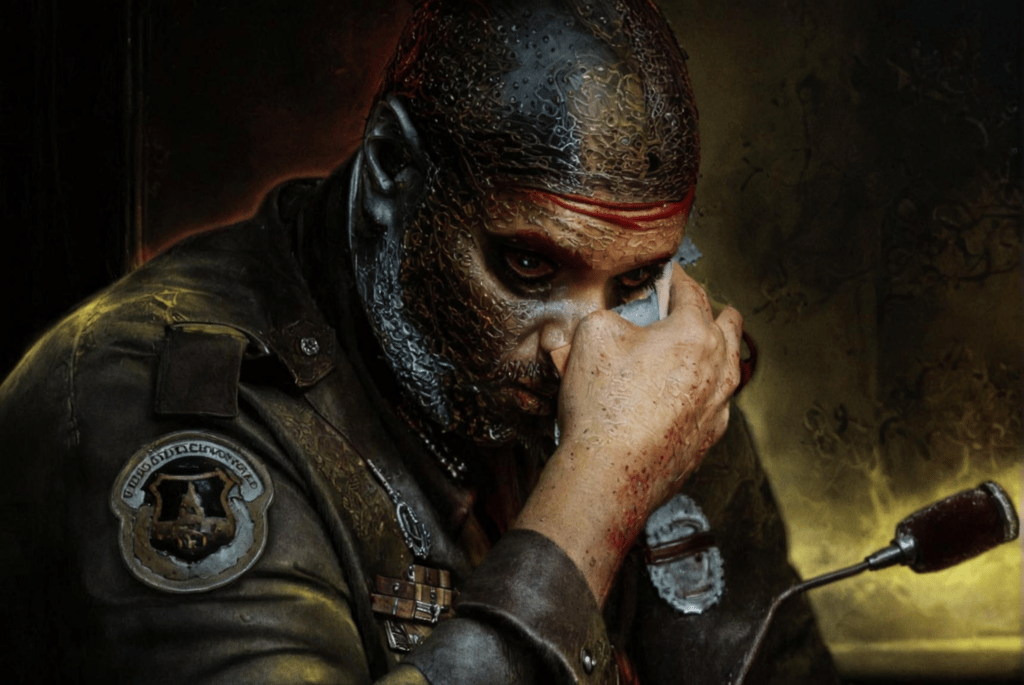
Larry Dunn #4
Legacy of a Defender - In the months after his testimony, Larry Dunn’s life changed in ways he hadn’t expected. He had stepped into the national spotlight not because he wanted to, but because he felt it was necessary. He didn’t see himself as a public figure or an activist—he was just a police officer who had told the truth. But that truth had reverberated across the nation. People from every corner of the country reached out to him: veterans who had sworn the same oath to protect the Constitution, young officers just beginning their careers, and everyday citizens who had been shaken by what they saw on January 6th.
DJT
1/5/20255 min read
Legacy of a Defender
In the months after his testimony, Larry Dunn’s life changed in ways he hadn’t expected. He had stepped into the national spotlight not because he wanted to, but because he felt it was necessary. He didn’t see himself as a public figure or an activist—he was just a police officer who had told the truth. But that truth had reverberated across the nation. People from every corner of the country reached out to him: veterans who had sworn the same oath to protect the Constitution, young officers just beginning their careers, and everyday citizens who had been shaken by what they saw on January 6th.
But with the outpouring of support also came an undercurrent of resistance. The attacks against Larry intensified online, many of them steeped in the same hatred he’d heard shouted at him in the Capitol. Anonymous messages flooded his inbox, calling him a traitor, a liar, and worse. Some even threatened his life. Larry had spent years in law enforcement—he knew how to spot empty threats and how to tell when someone might mean it. Still, he refused to let the fear dictate his life.
One day, after receiving a particularly disturbing threat, a close friend asked him, "Larry, why keep putting yourself through this? Haven’t you done enough?"
Larry thought for a moment, then answered simply, "If I stop telling the truth, who will?"
That conviction kept him going. While the political world wrestled with investigations, hearings, and lawsuits, Larry stayed focused on what mattered to him: honoring the sacrifices of his fellow officers and holding those responsible for the attack accountable.
In 2022, Larry was invited to speak at a memorial event for the officers who had defended the Capitol. He stepped onto the stage wearing a sharp suit, but the pain of that day still weighed on his shoulders. He looked out at the crowd—families of fallen officers, colleagues in uniform, and ordinary people who had come to pay their respects. His heart clenched as he saw the faces of the widows and children sitting in the front row.
Larry adjusted the microphone and took a steadying breath. "We’re here today to remember those who didn’t make it home," he began, his voice resonant but soft. "We’re here because they stood for something greater than themselves. They stood for democracy, for justice, and for the simple idea that this country is worth defending."
He paused, letting the weight of his words settle over the audience. "They were husbands, fathers, sons, and friends. They were more than their uniforms. And they deserve more than our memories—they deserve our action."
His speech was met with a standing ovation, but Larry wasn’t interested in applause. He wanted people to walk away with a sense of purpose. "We can’t let their sacrifices be in vain," he reminded the crowd. "This is bigger than politics. This is about who we are as a nation."
Larry’s advocacy grew stronger in the months that followed. He joined initiatives aimed at combating disinformation and promoting civic education. He believed that one of the greatest threats to democracy was ignorance—the kind that allowed lies to fester and spread. "People need to understand how fragile democracy is," he said in one interview. "It’s not some unbreakable thing—it’s held together by people who choose to do the right thing, even when it’s hard."
Larry began working closely with police organizations to address the trauma faced by officers who had endured the events of January 6th. He spoke openly about the need for mental health support in law enforcement. "We ask officers to stand between chaos and order, but we don’t always give them the tools to heal afterward," he said during a conference for first responders. "We owe them more than medals and ceremonies. We owe them care."
Larry’s words carried weight because they came from experience. He wasn’t speaking as an outsider with theories—he was speaking as someone who had felt the weight of the shield and the blows of the mob. When he sat down with young cadets at police academies, they listened intently, some with tears in their eyes. "You’re going to see things that stay with you," he told them. "But you don’t have to carry it alone."
Despite the heaviness of his mission, Larry made time for joy. He reconnected with old friends, spent more time with his family, and took long walks through his neighborhood without worrying about who might recognize him. But there were still quiet moments when the memories of January 6th returned—moments when he could still hear the chants, see the shattered glass, and feel the sting of that slur.
One of the most profound moments of Larry’s post-testimony journey came on the second anniversary of January 6th. The Capitol was once again filled with people—not rioters, but mourners and defenders of democracy. A commemoration ceremony was held to honor the officers who had defended the building that day. Larry stood at the foot of the Capitol steps, his hands folded in front of him as bells tolled in remembrance. The sound echoed across the National Mall, a somber reminder of what had been lost and what had been saved.
After the ceremony, a young officer approached Larry with tears in his eyes. "I joined the Capitol Police because of you," he said, his voice shaking. "You reminded me that this job still matters."
Larry felt his throat tighten. "It does," he replied softly. "It always will."
For Larry, the fight for accountability wasn’t just about holding individuals responsible—it was about protecting the truth. He didn’t want January 6th to be remembered as a political talking point. He wanted it to be remembered as a moment when ordinary people—officers, staffers, and citizens—chose to defend democracy against the odds.
In 2023, Larry published a memoir titled "Standing Tall: A Defender’s Story." The book was an unflinching account of his life, from his childhood in Maryland to the harrowing events of January 6th. He wrote about the pain of hearing racial slurs in the very building he had sworn to protect and the anger he felt as the truth was distorted in the days that followed. But the memoir wasn’t just about trauma—it was about resilience. "We stood our ground," Larry wrote. "We didn’t let hate win."
The book became a bestseller, praised for its honesty and its powerful message of courage. In interviews, Larry was often asked if he had any regrets about stepping into the public eye. He always gave the same answer: "None. I did my job."
Larry’s story reached people far beyond the halls of Congress. He received letters from students who had read his book in their history classes, veterans who saw his story as a continuation of their own fight for justice, and parents who used his example to teach their children about integrity.
But for all the accolades, Larry remained humble. He didn’t see himself as a hero. "I was just one of many," he often said. "There were so many officers who stood with me that day. I just happened to be the one telling the story."
Years later, when asked how he wanted to be remembered, Larry’s answer was simple: "As someone who told the truth when it mattered most."
For those who knew his story, Larry Dunn’s legacy was clear. He wasn’t just a police officer—he was a defender of democracy, a voice of truth, and a reminder that real courage isn’t loud or boastful. It’s quiet, steady, and unbreakable.
When future generations asked how the Capitol stood that day, they would learn the names of those who had held the line. And among those names, Larry Dunn would stand tallest of all.