Nathaniel Hodges #4
A Hero’s Resolve The applause that followed Nathaniel Hodges’ testimony was deafening, but he barely heard it. He wasn’t there for applause—he was there for the truth. As he stepped away from the witness stand, he felt the weight of everything he had carried since January 6th lift, if only for a moment. He had told his story, raw and unfiltered. He had shown the world the pain, the fear, and the courage it took to survive that day. Now it was up to others to decide what they would do with the truth he had laid bare.
DJT
1/5/20255 min read
A Hero’s Resolve
The applause that followed Nathaniel Hodges’ testimony was deafening, but he barely heard it. He wasn’t there for applause—he was there for the truth. As he stepped away from the witness stand, he felt the weight of everything he had carried since January 6th lift, if only for a moment. He had told his story, raw and unfiltered. He had shown the world the pain, the fear, and the courage it took to survive that day. Now it was up to others to decide what they would do with the truth he had laid bare.
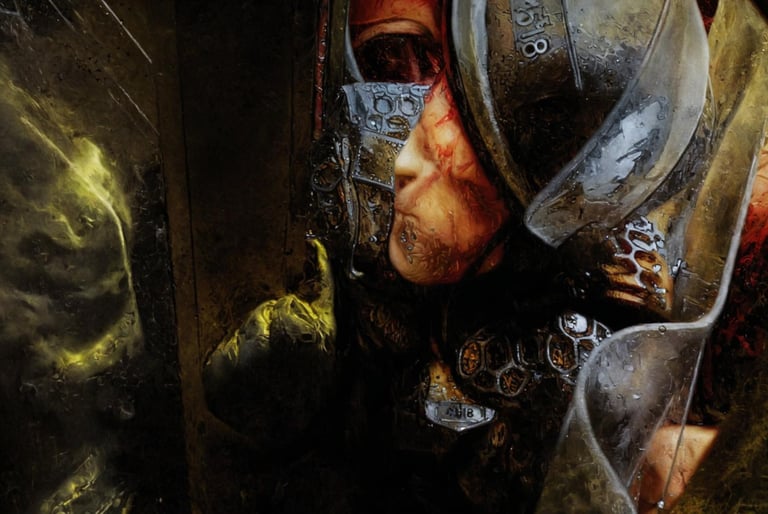
In the days following his testimony, Nathaniel became an unintentional symbol of resilience. The image of him pinned in the Capitol doorway, screaming in pain as the mob crushed him, had become one of the defining visuals of January 6th. But now, the world had seen another image—Nathaniel standing tall in a suit, his voice steady, recounting what happened with unshakable resolve.
Despite the outpouring of support from across the nation, Nathaniel struggled in the quiet moments. When the cameras turned off and the questions stopped, he was left alone with the memories. He’d fought to stay strong for others, but there were nights when the memories hit him like a freight train. He’d wake up gasping for breath, his chest aching with the phantom weight of the door that had nearly crushed him.
The trauma was like a shadow that stretched across his life, following him into moments where he should have felt safe. Grocery store aisles, crowded sidewalks, even quiet moments at home—there was always a part of him that was waiting for something to break.
Nathaniel leaned on his family for strength. His parents had always been his moral compass, and now, they became his greatest supporters. His father’s steady voice on the phone reminded him that healing was a journey, not a destination. His mother’s quiet presence during visits gave him permission to feel vulnerable without fear of judgment. "You don’t have to be invincible, Nathaniel," she reminded him one evening. "You already proved your strength."
And yet, despite his pain, Nathaniel knew he couldn’t walk away from his role in the fight for accountability. The nation had seen what he endured, but the country was at a crossroads. Misinformation still spread like wildfire, and some leaders continued to downplay what had happened that day. Nathaniel wasn’t naïve—he knew that change wouldn’t come easily. But he also knew that his silence could be just as dangerous as the lies.
Nathaniel’s decision to speak publicly wasn’t about seeking recognition—it was about giving a voice to the officers who couldn’t speak for themselves. Some were still recovering from their injuries, both physical and emotional. Others had fallen into deep despair, unable to bear the weight of what they’d experienced. Nathaniel knew officers who had taken their own lives in the months following the attack. The grief of those losses felt unbearable at times.
One day, after attending the funeral of a fellow officer who had died by suicide, Nathaniel made a vow to himself. "No one should have to carry this alone," he said quietly as he stared at the folded flag in his hands.
He began to advocate for better mental health resources for first responders. He spoke at police academies, town halls, and national conferences. His message was clear: the mental and emotional toll of the job couldn’t be ignored. "We’re not superheroes," he told a room full of young officers during one speech. "We’re human beings. And if we don’t take care of ourselves, we can’t take care of anyone else."
Nathaniel’s words resonated. Officers who had never spoken about their struggles began reaching out, sharing their stories for the first time. One officer sent him a handwritten letter: "I saw your testimony, and for the first time, I didn’t feel ashamed of what I’ve been going through. Thank you for reminding me that I’m not weak—I’m human."
Nathaniel kept that letter in his desk as a reminder that his pain had a purpose.
In 2023, Nathaniel published his memoir, "Pinned but Unbroken: A Defender’s Fight for Democracy." The book wasn’t just a recounting of what happened on January 6th—it was a reflection on everything that led him to that moment and everything that came after. He wrote about his childhood in Richmond, his time as a rookie cop in D.C., and the moment he thought he was going to die as the mob crushed him in the doorway.
But the memoir wasn’t just about trauma—it was about resilience. Nathaniel wrote candidly about his struggles with PTSD, the anger he felt toward those who had minimized the attack, and his determination to make sure the truth wasn’t forgotten. "The real strength," he wrote, "isn’t in surviving the moment—it’s in choosing to keep moving forward after everything falls apart."
The book became an instant bestseller, praised for its honesty and its call to action. In interviews, Nathaniel was often asked what kept him going despite everything he had endured. His answer was always the same: "The truth matters. Democracy matters. And some things are worth standing for, no matter how hard it gets."
Nathaniel’s advocacy extended beyond speeches and interviews. He became a key figure in bipartisan efforts to address the rise of political violence. He worked with lawmakers on both sides of the aisle to strengthen protections for law enforcement officers and government institutions. But he also pushed for transparency and accountability. "We can’t heal as a country if we refuse to confront what happened," he said during a press conference in 2024. "We have to name the truth, even when it’s uncomfortable."
One of the most poignant moments of Nathaniel’s post-January 6th journey came during a remembrance ceremony at the Capitol. Standing in the same place where he had once been pinned, he placed a hand on the cold metal doorframe. The memory of that moment was still vivid—the weight, the pain, the shouts of the mob. But as he stood there now, he wasn’t just remembering the fear—he was remembering his survival.
After the ceremony, a young boy approached Nathaniel with wide eyes. "Are you the officer from the news?" he asked shyly.
Nathaniel crouched down, ignoring the pain in his knees. "Yeah, that’s me," he said with a small smile.
The boy’s mother stepped forward, her voice thick with emotion. "My son wanted to meet you," she said. "He learned about what you did in school. He calls you a real-life hero."
Nathaniel felt a lump in his throat as the boy extended a small hand for a handshake. "Thank you for being brave," the boy whispered.
Nathaniel shook his hand gently. "You can be brave too," he said. "Just remember—being brave doesn’t mean you’re not scared. It means you show up anyway."
Nathaniel Hodges’ story became part of the national consciousness, a reminder that democracy wasn’t just words in a history book—it was something fragile, something people had to fight to protect. His resilience inspired a generation to stand up for truth and justice, even when it was hard.
Years later, when asked how he wanted to be remembered, Nathaniel gave a quiet smile and said, "As someone who showed up."
And that’s exactly who he was—a man who showed up when everything was on the line. A man who stood his ground in the face of hatred and violence. A man who reminded the world that strength isn’t about never falling—it’s about refusing to stay down.
When future generations learned about January 6th, they would read about the officers who held the line. And among those names, Nathaniel Hodges would forever stand tall as a symbol of unbreakable courage.